
Emergency Care
Round-the-Clock Rapid Response and Critical Trauma Management
About Our Emergency Care
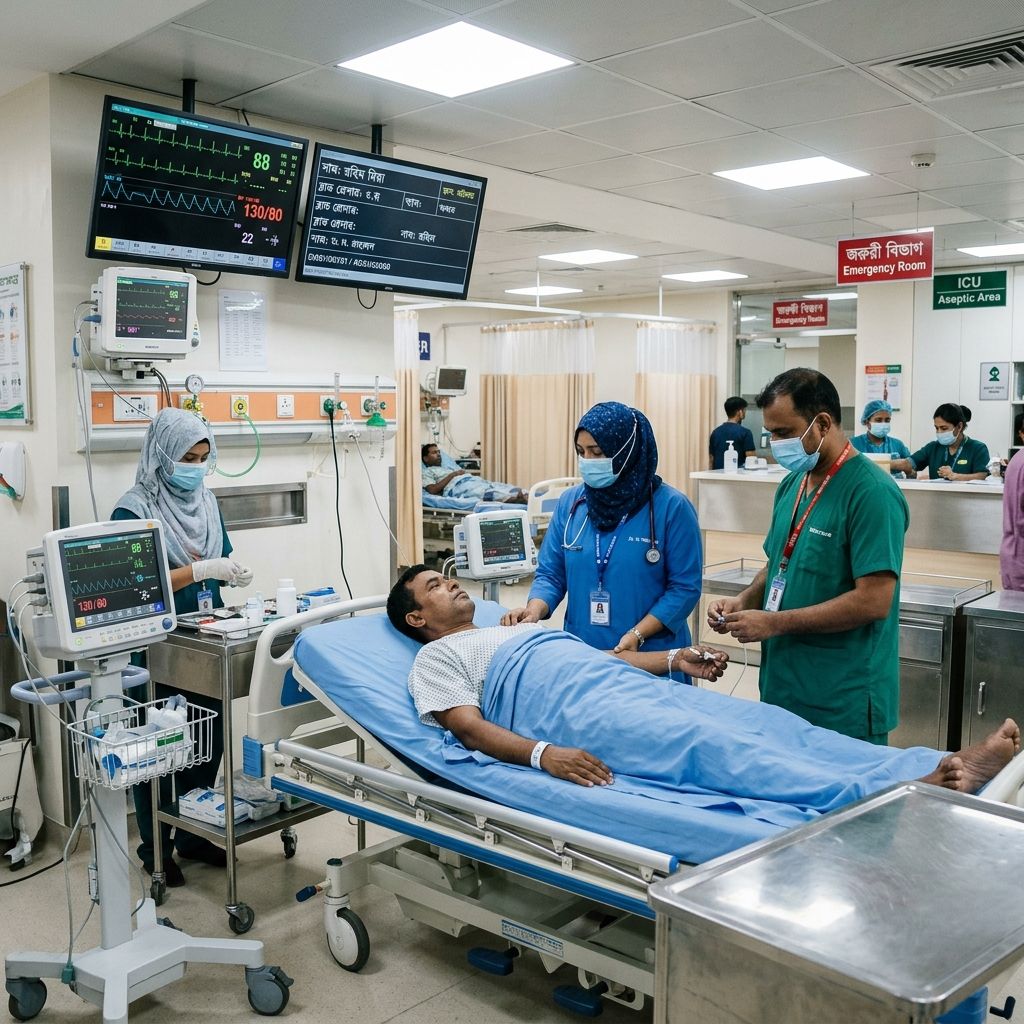
The Emergency & Trauma Care Unit at Shilmoon Specialized Hospital is a fully integrated, state-of-the-art facility operating 24 hours a day, 365 days a year. We are equipped to handle all medical emergencies, from minor injuries to severe, life-threatening polytrauma cases.
Our unit is staffed by a dedicated team of emergency physicians, trauma surgeons, cardiologists, and highly trained critical care nurses. We implement a rapid triage protocol, ensuring that patients in critical condition receive immediate, prioritized medical intervention.
Supported by our adjacent 24/7 Diagnostics (Radiology & Pathology), Pharmacy, and sterile Operation Theatres, the emergency team can quickly run diagnostic CT scans, labs, and perform emergency surgeries. We are committed to preserving life and ensuring the highest standards of safety.
Key Features & Offerings
- 24/7 emergency response with dedicated critical trauma bays.
- Experienced trauma specialists, anesthesiologists, and surgeons on call.
- Direct linkage with ICU, NICU, and C-ARM Operation Theatres.
- Dedicated emergency triage system to prioritize life-threatening cases.
- Immediate bedside diagnostics and point-of-care lab test panels.
- Fully integrated cardiac response unit for heart attack emergencies.
Need Immediate Assistance?
For consultations, scheduling, or urgent inquiries regarding our Emergency Care, get in touch with our clinical helpdesk.
Frequently Asked Questions
When should I go to the Emergency Room?
You should seek emergency care for severe chest pain, difficulty breathing, sudden weakness or numbness, heavy bleeding, head injuries, or major physical trauma.
Is a doctor always present in the emergency room?
Yes, qualified emergency medical officers and critical care nurses are physically present in the ER at all hours, with specialists available on call 24/7.
How does the emergency triage process work?
Upon arrival, a nurse evaluates the severity of the patient's condition. Patients with life-threatening issues (like cardiac arrest or severe trauma) are treated immediately, ahead of non-urgent cases.